Blog / Review scraping empowers brands by tracking sentiment, detecting risks, benchmarking rivals, and safeguarding trust for stronger online reputation management.
01 January 2026
In the digital marketplace, reputations shift instantly. Customer reviews have become modern word of mouth. Reviews are not just feedback about your brand, but its emotional feelings. Whether you have a new business or an established one, reviews are important for understanding your customers. By interpreting reviews, your brands can know what customers are saying about your brands and services. To know customer reviews, you need to scrape them from a competitor’s website. This blog is all about review scraping and how it helps you monitor brands and manage their online reputation.
Review scraping can be defined as an automated approach to pull out the required data from a competitor’s website. It helps you collect sentiment, product features, user experience, and more. Review scraping is important to know what your customers are thinking about the products you are selling. Customer is king, and therefore, extracting reviews written by them helps you serve them better by reinforcing product development.
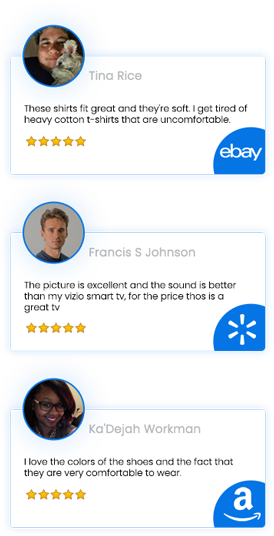
Review scraping helps you obtain review data and organize it into a format that can be easily analyzed. It collects seller name, title, image URL, descriptions, color, size, review text, and more. The data is directly collected from the e-commerce website and can be used for review analysis.
Reviews are valuable to build strong customer trust and increase credibility. It helps brands to know customer purchase decisions and to influence buying choices. Ratings are useful to boost online visibility and a higher search ranking. Reviews help you know positive, negative, and neutral messages of customers.
Reviews are crucial to improve your business and maintain a competitive edge. It is an ultimate way to improve products and services. Feedback provided by the customer is actually social proof. For example, if this feedback is positive, then it encourages customers to utilize your services or products, and therefore, it accelerates your ROI.
Review scraping has contributed significantly to brand monitoring & managing online reputation. Collecting reviews in real-time enables your brand to understand customer sentiment. Therefore, if you want to know what customers are thinking about your brand, review scraping is ideal.
Scraping reviews helps brands capture customer sentiment. It enables businesses to track reviews immediately. Extracting reviews from competitors’ websites is used to recognize trends and identify emerging patterns. You can use it to detect crises and spot issues early. By tracking reviews, you protect your brand reputation by preventing negative escalation.
Tracking your reviews enables you to serve better based on the tone used. Monitoring reviews provides fresh data, which ensures that you get up-to-date insights. By scraping and tracking reviews, businesses help you engage customers and strengthen brand relationships.
By extracting reviews, you can spot issues early, and therefore, you can prevent major problems. It is very useful to enhance your services in order to upgrade support quality. Scraping reviews provides comprehensive market insights to track industry shifts. It is effective in optimizing campaign optimization and adjusting marketing strategy. Extracting reviews is essential for the continuous improvement of your business, which drives ongoing success.
Scraping reviews is crucial to allocating resources so that you can focus on priorities. It empowers you to develop strategic planning, which guides long-term goals. Extracting feedback from competitors’ websites helps you bring a growth opportunity to identify new markets.
Review scraping provides competitive insights such as pricing strategy, product features, customer sentiment, and market share that are used to detect your market position. These insights help you understand your brand standing. Scraping reviews enables you to know consumer preferences and know every strategy of your rival. It provides competitive insights that are used to enhance your marketing channels.
Extracting and monitoring customer reviews and ratings can help you spot new development areas. If you have a newly established business, then scraping reviews will help you know the strengths & weaknesses of your business.
Scraping and analyzing reviews are key for every successful business. It is a great approach to maintain positive relationships with your customers. If the reviews are negative, then it enables a quick crisis response. You can use customer feedback to monitor star ratings and adjust public messaging. Scraping reviews helps you identify influencer buzz. This is required to strengthen your social reputation.
When you scrape reviews, you can analyze review language to improve tone alignment. It helps you ensure a consistent presence of your brand and track your platforms. Collecting customer reviews from digital platforms like e-commerce sites, review sites, and social media sites can spot unmet needs.
Review scraping helps you know product feedback. It can help you refine product features. Extracting reviews reveals emerging keywords helping you match the exact terms users are searching for in search engines. Knowing customer reviews enables brands to provide better support by understanding customer emotions. It provides regional insights that can be utilized to localize brand strategy.
You can extract a wide range of reviews from different online sources. Here, we will discuss the primary data.
Extracting reviews from any relevant sources empowers you to improve your services and products. It helps brands understand customer tone. If you want to gain competitive advantages, then you need to scrape and analyze customer reviews from your competitor’s website. Customer reviews act as social proof for brand monitoring and online reputation management. ReviewGators stands out as the best review scraping service. If you do have any requirements, you can directly approach us for the same.
Feel free to reach us if you need any assistance.
We’re always ready to help as well as answer all your queries. We are looking forward to hearing from you!
Call Us On
Email Us
Address
10685-B Hazelhurst Dr. # 25582 Houston,TX 77043 USA

ReviewGators provides the Best Online Reviews API to help you access well-structured data of customers’ feedbacks.
© 2012 - 2026 ReviewGators, All rights reserved.




Disclaimer : Reviewgators.com only extracts or scrape the information or the data that is publicly available as well as does not scrape personal or identity-related information.